ServiceNow vs. Cockpit ITSM: An Honest Comparison
Which ITSM Solution Is Right for Your Business?
Choosing the right IT Service Management (ITSM) solution is an important decision. With so many features, competing promises, and different pricing models, identifying the platform that best fits your organization’s needs can be challenging.
Should you choose a comprehensive enterprise platform or a more straightforward solution that helps your teams work efficiently without unnecessary complexity?
And what are the real differences between ServiceNow and Cockpit ITSM?
In this article, we compare both solutions, exploring their key features, strengths, limitations, and ideal use cases. Our goal is to help you understand what each platform offers and make an informed decision based on your organization’s needs, resources, and priorities.

What Will You Learn?
In this comparison, we’ll explore:
The main features and capabilities of ServiceNow and Cockpit ITSM
The strengths of each solution and the challenges to consider
The types of organizations each platform is best suited for
The differences in cost, usability, customization, and implementation
The key factors to consider when selecting an ITSM solution
Our objective isn’t to declare one solution universally better than the other. It’s to help you identify which one makes the most sense for your organization.
ServiceNow: A Comprehensive Enterprise Platform
ServiceNow is a globally recognized cloud platform designed to manage IT services, IT operations, and a wide range of business workflows.
Its extensive capabilities make it particularly suitable for large organizations with complex processes, diverse systems, and demanding integration requirements.
Is ServiceNow Right for You?
ServiceNow may be a good fit if:
You’re a large enterprise or multinational organization.
Your IT environment involves complex processes and numerous dependencies.
You have dedicated teams to manage and maintain your ITSM platform.
You require extensive customization and integration capabilities.
You have the budget and resources to support a substantial implementation project.
The Main Strengths of ServiceNow
1. Extensive functional capabilities
ServiceNow provides a broad range of features for managing IT services and business workflows. Its platform approach makes it possible to address diverse requirements within a common environment.
2. Advanced integration capabilities
ServiceNow supports integration with a wide variety of enterprise applications and IT systems. This makes it particularly relevant for organizations operating complex technology environments.
3. Extensive customization options
The platform can be configured and extended to accommodate specific business requirements and sophisticated workflows.
However, extensive customization can also introduce additional costs, increase implementation time, and create a need for specialized expertise.
For organizations with complex requirements and the resources to manage them, these capabilities can be valuable. For others, they may introduce more complexity than necessary.
Cockpit ITSM: Simplicity, Efficiency, and Continuous Improvement
Cockpit ITSM takes a different approach to IT Service Management.
Rather than starting with extensive customization, Cockpit ITSM focuses on providing practical, easy-to-use tools based on established ITSM best practices.
The objective is straightforward: help organizations improve their IT services, streamline processes, and increase operational efficiency without introducing unnecessary complexity.
Cockpit ITSM combines an intuitive platform with direct support and guidance, enabling IT teams to develop their service management capabilities progressively.
Is Cockpit ITSM Right for You?
Cockpit ITSM may be the right choice if:
You’re a medium-sized or large organization looking for an efficient ITSM solution.
You want to implement ITSM best practices without embarking on a complex transformation project.
You value direct support and assistance in your language.
You want to get started quickly and evolve your processes over time.
You need a flexible solution that can adapt to your organization’s changing requirements.
You want to maintain control over costs while improving service quality.
The Main Strengths of Cockpit ITSM
1. An approach based on proven best practices
Cockpit ITSM helps organizations establish a solid ITSM foundation before introducing additional complexity.
Teams can start with essential processes and gradually expand their use of the platform as their needs evolve.
The aim is to make ITSM accessible and practical, without requiring extensive development or external consulting to get started.
2. A user-friendly experience that encourages collaboration
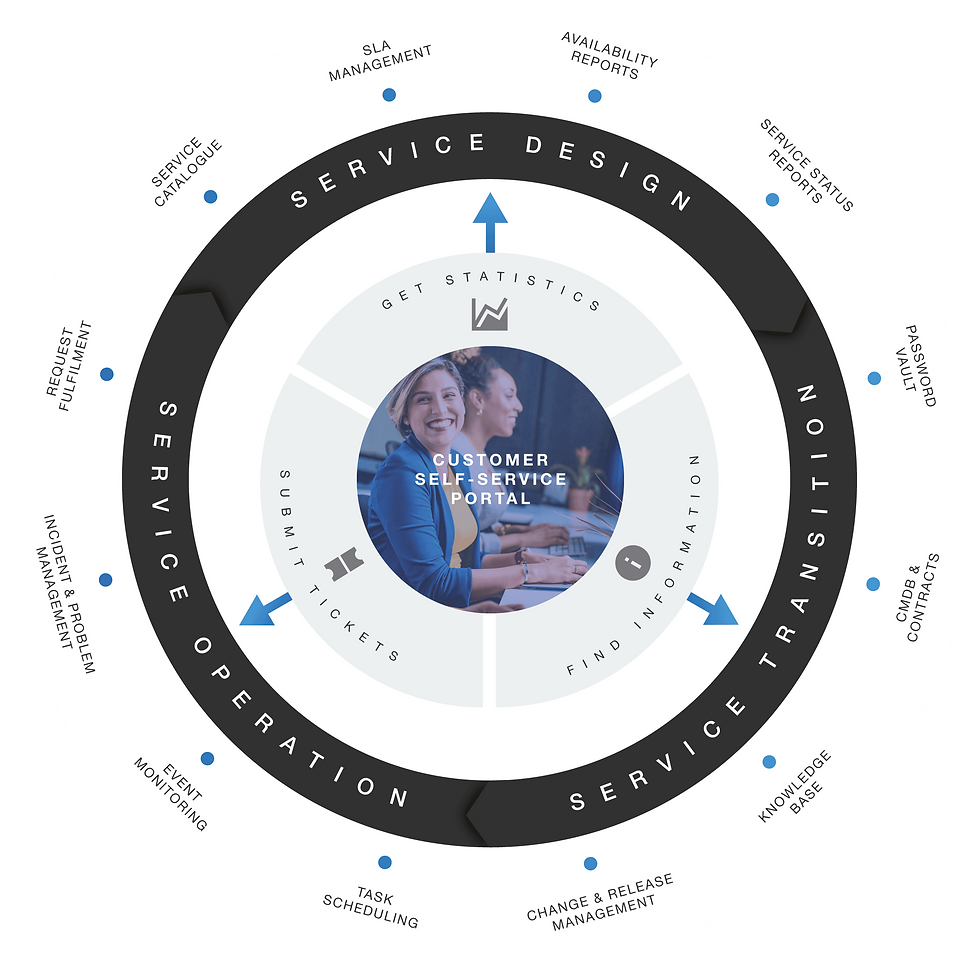
An intuitive self-service portal makes it easier for employees to submit requests, track incidents, and interact with IT teams.
By improving communication between users and service providers, Cockpit ITSM helps make IT services more accessible and transparent.
3. Continuous improvement through reporting and analytics
Effective ITSM requires more than managing tickets. Organizations also need to understand how their services perform and where improvements are possible.
Cockpit ITSM provides reporting capabilities that help teams monitor activity, identify trends, and evaluate opportunities to improve service quality and operational efficiency.
4. Direct support and practical guidance
Implementing ITSM is not simply a matter of deploying software. Organizations also need to establish effective processes and help their teams adopt new ways of working.
Cockpit ITSM combines its platform with direct support and training to help customers make progress at their own pace.
ServiceNow vs. Cockpit ITSM: A Side-by-Side Comparison
Both platforms support IT Service Management, but they differ in their approach, complexity, and suitability for different organizations.
Cost and Total Cost of Ownership
ServiceNow: Depending on the modules, licensing arrangements, implementation scope, and customization requirements, the overall investment can be substantial. Organizations should consider not only licensing costs but also implementation, integration, maintenance, and specialist expertise.
Cockpit ITSM: Cockpit ITSM offers a more accessible approach for organizations looking to implement ITSM without the overhead of an extensive customization project.
The key consideration: Evaluate the total cost of ownership, including the resources needed to deploy, operate, and evolve the solution—not just the initial subscription price.
User Experience and Ease of Use
ServiceNow: Its extensive capabilities provide considerable flexibility, but the platform can require training and specialist knowledge, particularly for administrators managing complex configurations.
Cockpit ITSM: Its emphasis on simplicity and intuitive workflows helps users get familiar with the platform quickly and encourages adoption across IT teams and the wider organization.
The key consideration: A platform delivers value only when people can use it effectively. Consider the learning curve for administrators, technicians, and end users.
Complexity and Customization
ServiceNow: Extensive configuration and customization options make it suitable for organizations with highly specific requirements. However, these capabilities may increase implementation effort and long-term maintenance needs.
Cockpit ITSM: Its best-practice-based approach prioritizes practical functionality and straightforward configuration, helping organizations avoid unnecessary complexity.
The key consideration: Determine whether your organization genuinely needs extensive customization or would benefit more from a solution built around established practices.
Flexibility and Scalability
ServiceNow: Its broad platform capabilities support complex enterprise environments and a wide range of business requirements. The challenge is ensuring that configurations and customizations remain manageable as the organization evolves.
Cockpit ITSM: Its approach allows organizations to start with essential processes and expand their use of the solution as their service management requirements grow.
The key consideration: Look for a platform that can accommodate future needs without creating unnecessary administrative or technical overhead.
Implementation and Support
ServiceNow: Implementation projects can involve internal specialists, external implementation partners, and substantial coordination, depending on the scope and complexity of the deployment.
Cockpit ITSM: The solution is designed to simplify implementation through practical functionality, direct support, and training.
The key consideration: Assess how quickly you need to become operational and how much internal expertise you can dedicate to the project.
How to Choose the Right ITSM Solution
The best choice depends on your organization’s objectives, operational complexity, available resources, and long-term strategy.
Choose ServiceNow If…
ServiceNow is worth considering if:
Your organization has highly complex IT and business processes.
You require extensive customization and sophisticated workflows.
You need to integrate a broad range of enterprise systems.
You have dedicated teams or specialist partners to manage the platform.
Your budget and project timeline can accommodate a comprehensive implementation.
For organizations with these requirements, ServiceNow’s extensive capabilities can provide significant value.
Choose Cockpit ITSM If…
Cockpit ITSM may be a better fit if:
You want to improve IT service delivery without unnecessary complexity.
You prefer an intuitive solution based on established ITSM best practices.
You want to implement your core processes quickly and develop them progressively.
You value direct support, training, and practical guidance.
You want to balance functionality, efficiency, and overall cost.
For organizations seeking a pragmatic approach to ITSM, Cockpit ITSM offers a way to structure and improve service management without turning the platform itself into a major project.
Conclusion: Which Solution Is Best for Your Organization?
There is no single ITSM solution that is right for every organization.
ServiceNow and Cockpit ITSM address different priorities, and the right choice depends on what your business actually needs.
ServiceNow is worth considering for large enterprises with complex requirements, extensive integration needs, and the resources to manage a highly configurable platform.
Cockpit ITSM is an alternative for organizations that prioritize simplicity, efficiency, and progressive improvement, without the overhead of unnecessary complexity.
Before making your decision, consider five essential questions:
What are our current ITSM challenges?
Which processes do we genuinely need to manage?
How much customization is necessary?
What resources can we dedicate to implementation and ongoing administration?
What is the total cost of ownership over the next several years?
Answering these questions will help you identify the solution that best fits your organization—not simply the platform with the longest feature list.
Ultimately, the objective is the same: improve IT service quality, make life easier for users, and help IT teams work more efficiently.
The best solution is the one that enables you to achieve these goals sustainably.
Want to Discover Cockpit ITSM?
If you’re looking for a practical way to improve your IT Service Management, discover how Cockpit ITSM can help your organization streamline processes, improve collaboration, and build a foundation for continuous improvement.
Request a demo to explore the platform and see how it could fit your organization’s needs.